The frantic digital gold rush of the early 2020s—that brief, hysterical epoch where the art world collectively misplaced its sanity in pursuit of pixelated receipts, vaporous NFTs, and etherealprimates—has finally broken its fever. The collective sigh of relief vibrating through the galleries in 2023 is almost auditory. The collecting public, having spent twenty-four months staring into the blinding, flat void of the glowing smartphone screen, has arrived at a state of profound visual and spiritual fatigue. We have been starved of weight. We have been starved of physical friction. We have been starved of absolute presence.
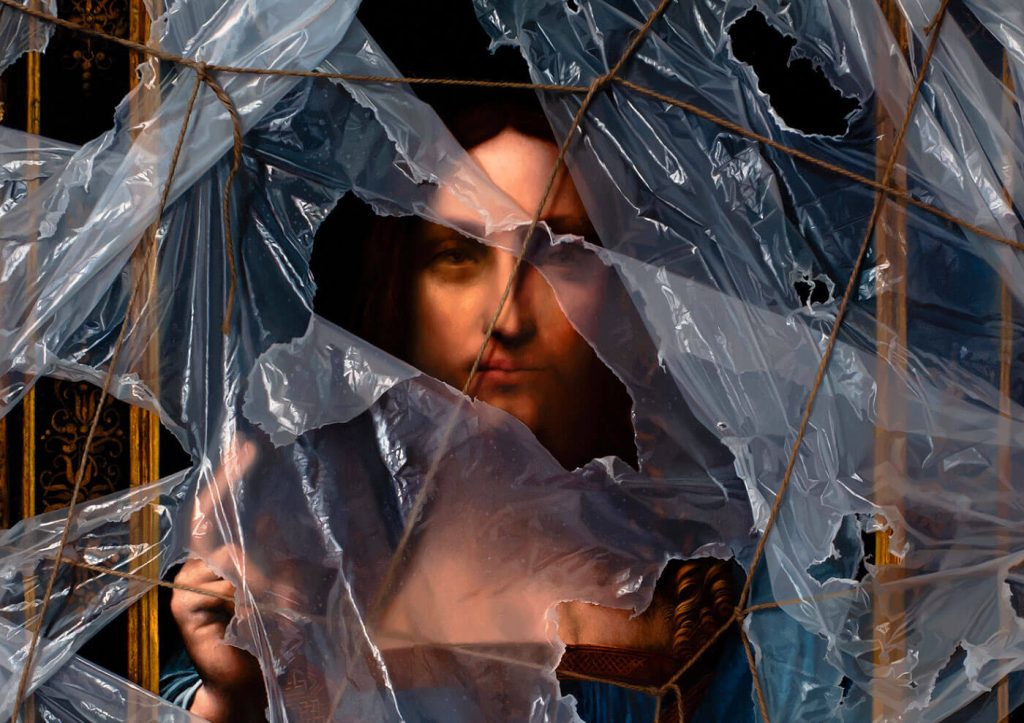
Courtesy Robin Eley
What we are witnessing in 2023 is not a mere shift in taste, but a visceral, elegant counter-revolution. It is the return of “palpable authenticity”—a sensory longing for the stubborn, unapologetic reality of real surfaces, thick mediums that cast their own mournful shadows, and a raw presence that possesses the audacity to exist in three dimensions. The grave, after all, remains the final, uncompromised architecture of our vanity—a stubborn, heavy tapestry of loam and bone that flatly refuses to be compressed into the weightless, sacrilegious exile of a seventy-two-dot-per-inch thumbnail. It cannot be reduced to a flat, luminous ghost.
THE TEXTURAL SPECTRUM: ART IN 2023
+———————————–+——————————————-+
| THE FRICTIONLESS VOID (2021-22) | THE TACTILE ARCHETYPE (2023) |
+———————————–+——————————————-+
| – Weightless, odorless JPEGs | – The scent of polymers & linen |
| – Sterile smartphone glass | – Physical resistance of medium |
| – Infinite digital replication | – Stubborn, singular presence |
+———————————–+——————————————-+
The Sovereignty of the Surface: Against the Glass Tyranny
The modern smartphone screen is an architectural marvel designed to erase the human touch. It is smooth, sterile, and entirely frictionless—a glassy mirror that demands nothing from the viewer except a mindless, downward swipe. It reduces a masterpiece and a meme to the exact same depth of pixels, stripping art of its sacred odor, its physical gravity, and its volatile soul.
In defiance, the defining artists of 2023 have weaponized the concept of the surface. They are integrating heavy, physical textures and conceptual barriers that refuse to be flattened by a camera lens or compressed into a text message. This is art asserting its weight and its absolute refusal to be reduced to a convenient JPEG. It is a declaration that some things must be stood before, in person, to be felt.
Nowhere is this silent rebellion more brilliantly, satirically manifest than in the works of two contemporary titans who have chosen the exact same motif—the plastic wrapping of consumer commodification—to wage completely opposite wars against the digital void: Robin Eley and Bradley Hart.
Robin Eley: The Hyperrealist Mortician of Art History
If the post-digital age treats culture like an Amazon warehouse item, Robin Eley is the meticulous pathologist performing a high-art autopsy on history itself. As someone who spent a quarter-century intimately acquainted with the ultimate, un-scrollable physical reality—the cold, unapologetic weight of mortality itself—I find Eley’s clinical dissection of our visual culture both deliciously ironic and entirely inevitable.
Eley does not use real bubble wrap. He does not use real plastic. Instead, working with oil paint on Belgian linen with a technical skill that borders on the supernatural, Eley paints the flawless, hyperrealistic illusion of iconic historical masterpieces—Van Gogh’s Starry Night, Vermeer’s The Milkmaid, Leonardo’s Salvator Mundi—as if they have been crudely wrapped in commercial plastic film, sealed with brown packing tape, and prepared for shipping to some elite tax haven.
[ELEY’S METHOD]
Real Paint + Miraculous Illusion = The Shrouded Masterpiece
[HART’S METHOD]
Real Plastic + Injected Paint = The Physical Pixel Grid
Eley’s work is a masterclass in layered, contemporary satire. By painting the creases, the crinkled edges, and the light reflecting off a nonexistent layer of Saran Wrap, he forces the viewer into a dizzying double-take. Instagram followers frequently accuse him of video fraud, unable to comprehend that the plastic is entirely two-dimensional oil pigment.
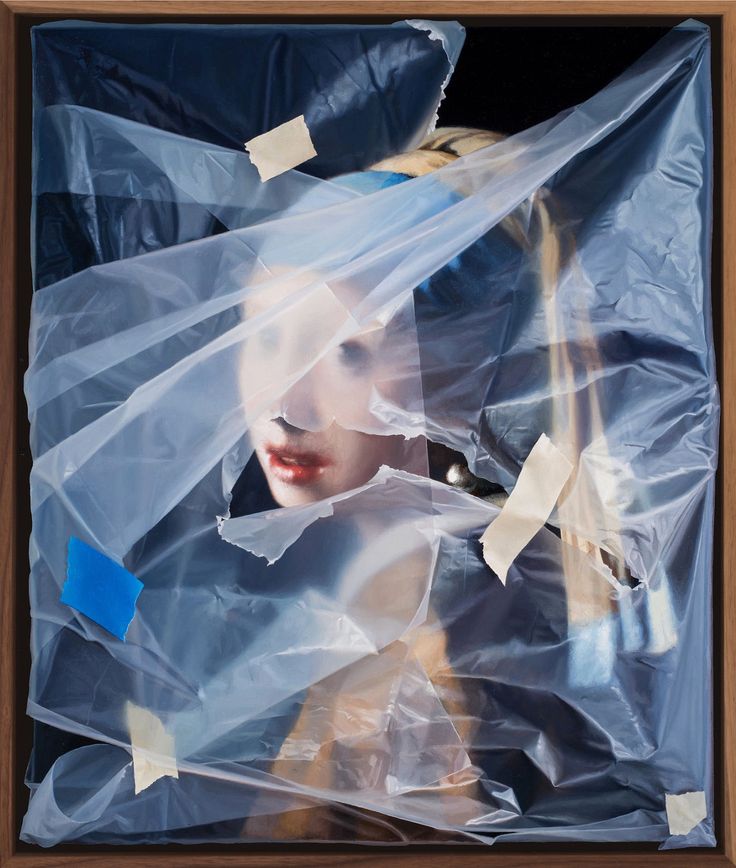
After Vermeer
The dark comedy here is delicious: Eley uses the ultimate traditional medium (oil on linen) to comment on our ultimate modern sins (overconsumption and the commodification of culture). The painted plastic wrap is a metaphor for the modern experience of isolation. It is something you can see through, but never feel through. He has literally embalmed art history in a shroud of painted polymers, reminding us that in 2023, we treat our finest cultural triumphs like common shipping cargo, ready to be flipped for a profit.
Bradley Hart: The Syringe Sorcerer Who Mocked the Pixel
Where Eley wraps the past in an illusion of plastic, Bradley Hart takes the plebeian detritus of the industrial shipping trade and injects life directly into its veins. His 2023 works read like an exquisite, dark comedy, taking the very grid that defines our digital prisons and transforming it into a visceral, weeping monument of plastic and paint.
Hart’s chosen canvas is bubble wrap—that ubiquitous material invented in the 1950s as a failed wallpaper, repurposed to protect fragile consumer goods, and discarded without a thought. Hart looks at the round, uniform pockets of this plastic sheet and sees what they truly mirror: the modern pixel.
But Hart does not use a brush. He is a master painter who never actually paints. Instead, he utilizes medical syringes, painstakingly injecting acrylic paint into each individual, fragile bubble.
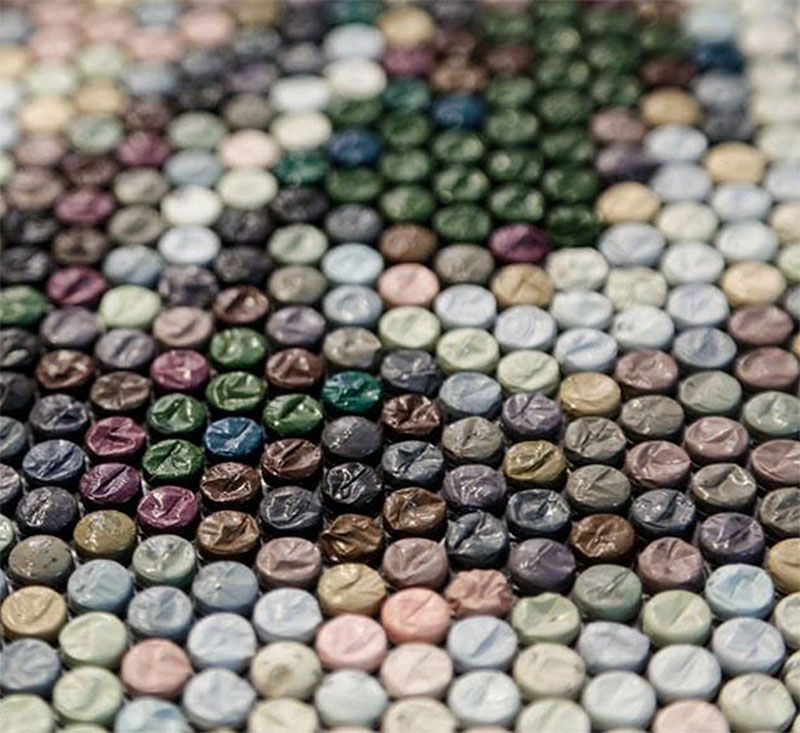
The process is slow, repetitive, and maddeningly precise—a direct mockery of the instant, automated rendering of artificial intelligence.
[The Digital Pixel] —-> Intangible, weightless, instantly refreshed on glass.
[Hart’s Bubble Pixel] —-> Physical, injected with fluid, subject to gravity & decay.
There is a profound, layered tragedy woven into this satire. Hart, who has navigated the progressive realities of multiple sclerosis for over a decade, turns the syringe from a clinical reminder of infirmity into an instrument of high-art creation. He takes total control over his medium, bubble by bubble, creating stunning, photorealistic portraits out of raw plastic.
Yet, if Hart’s Injection series represents the tyrannical desire for absolute digital control, his Impression series represents the gorgeous, inevitable decay of the flesh. As he injects each bubble, the excess acrylic paint is purposely designed to overflow, dripping down the flat, reverse side of the plastic sheet. Once the work is complete, Hart surgically peels this dried, visceral byproduct away from the plastic backing.
The result is a secondary, derivative artwork: the Impression. Where the Injection is sharp and calculated, the Impression is a ghostly, bleeding echo. It is the literal afterbirth of the artistic process—the organic, uncontrolled decomposition of a precise memory.
The Final Verdict: Rematerializing the Soul
To experience Eley and Hart side-by-side in 2023 is to watch the art world desperately try to pull itself back from the digital precipice. One wraps the physical past in a digital-age shroud; the other gives the pixel a physical body. Both understand that the digital realm promised immortality but delivered only ghost towns.
The contemporary canvas, thick with paint and heavy with truth, offers something far better: the exquisite, tactile reassurance that we are still here, still feeling, and still remarkably solid. Go to the galleries. Smell the linseed oil. Desire, if only with your eyes, to violate the gallery bylaws and touch the congealed polymers when the docent looks away. Remind yourself that you are alive before the screen forgets you entirely.

Please be decent to the docent.
Like this:
Like Loading...










 Q. My 15-year-old has suddenly become very excited about running away from home. I discovered this when I went into the youngster’s bedroom and found a large polka-dot kerchief, all knotted up with underwear inside, and tied to the business end of my Cleveland Niblick.


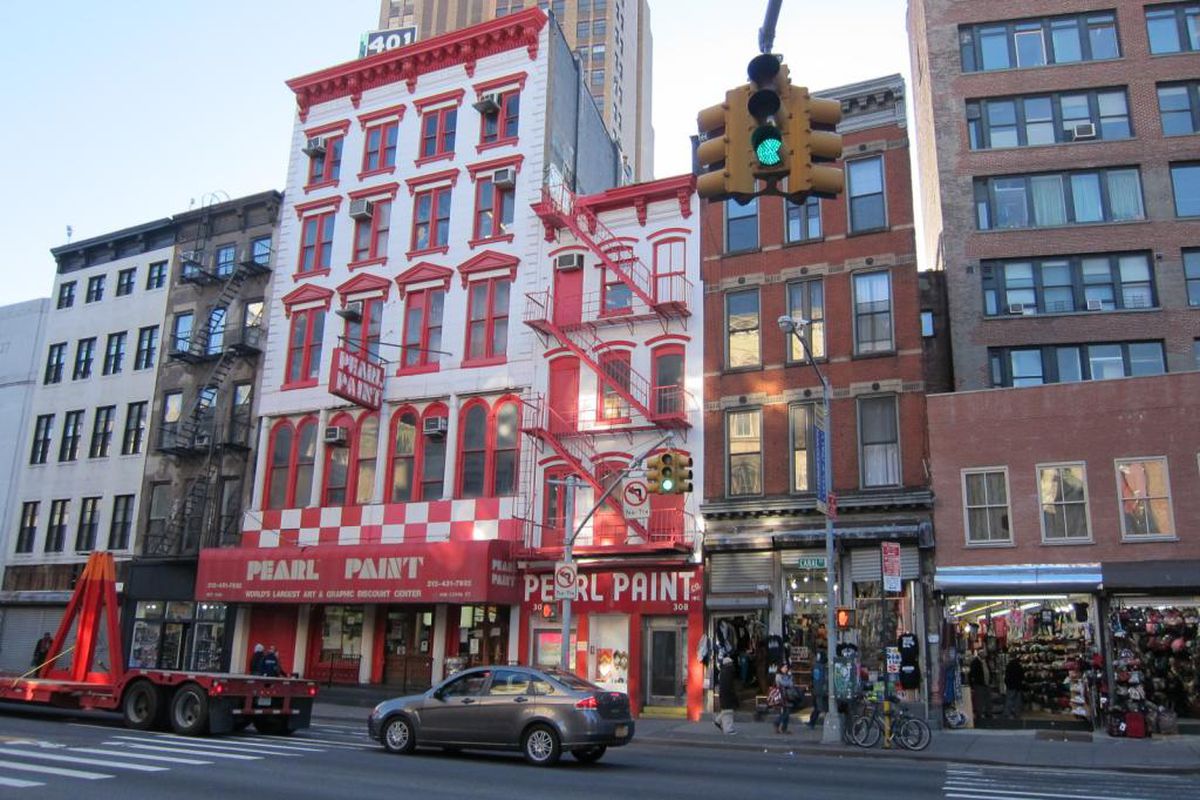


 I’d go visit Hector in the back, and he was curt and glum, implying I was trying to butter him up to get some freebies. I think the word had just come down that Lee’s was going to close.