It sounds a lot drearier than it is. There are lots of fascinating animation bits to build.
Alas and alack, the project was rushed into development without sufficient planning and resource. In six weeks there I have to be given any sort of orientation to the overall scheme of the project. While the project managers bounce around anxiously, demanding that everything be finished ten minutes ago, they seem unable to come up with anything as basic as a schedule, a flowchart, or even simple documentation explaining what they are trying to do.
When the opportunity arose recently to take a hiatus, I grabbed it. I'm hoping that when I return in a few weeks I won't have to touch anything to do with Exploria.
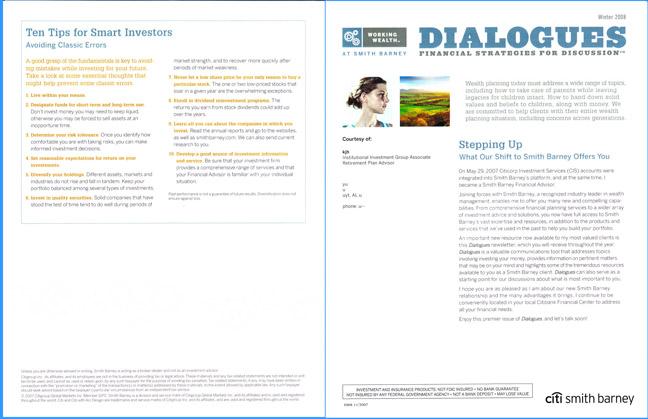
]]>Above: sample front/back spread for a customizable 8- or 16-page client newsletter, 2007. Part of an online web-to-print project for which I created the Quark and xml templates. Clients could select articles, images, and other elements, then review a pdf before pulling the trigger and ordering (say) 10,000 copies to be maillisted out next Tuesday.
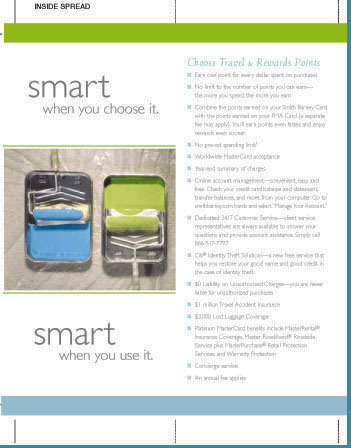
Detail of an FMA Card collateral piece for SB Advertising, early 2005.
If the design schema looks vaguely familiar, that could be because it was reflecting the neat-as-pin tiny-type layouts then current in web design. Case in point: the Movable Type blog you're looking at, which dates from the same period.
The style worked for blogs and posters and advertisements, but not for newsletters, which had to look messy and interesting so people would read the copy. E.g., the Accel piece below:
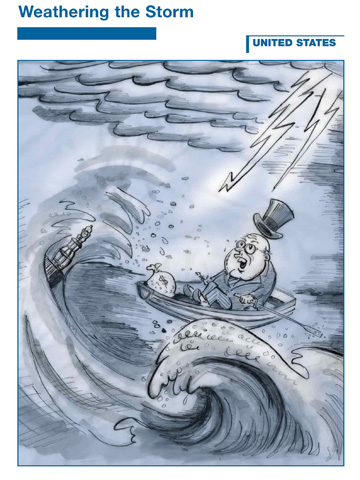
One of a series of covers I did for bond-research books, 2001-2006:
This looks very old:
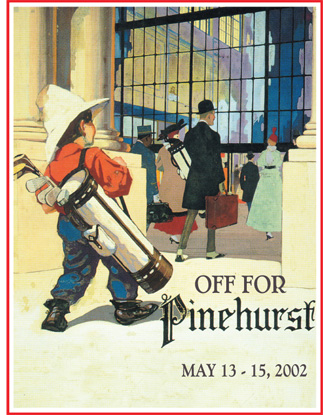
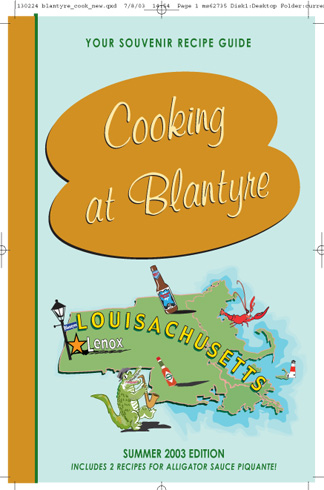
This was just silly. As they said in The Twilight Zone, It's a Cookbook!
Detail of elaborate display, Investment Banking in Silicon Valley:
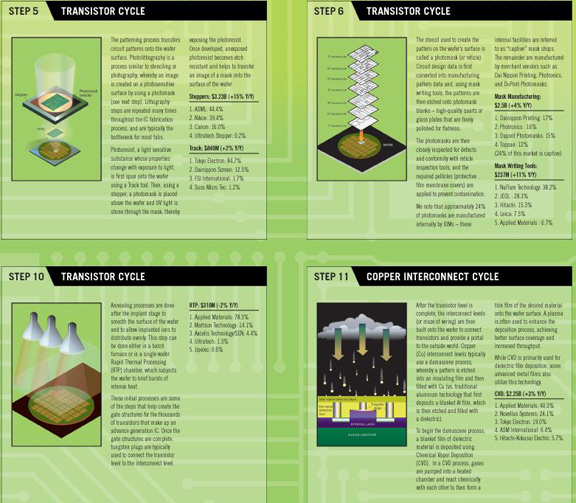
One of many web icons and branding elements I created, replaced, reworked or whatever:

Something about Microsoft and SCO vs Linux and Open Source?

I created 30 or 40 logos for Smith Barney alone. This one was current for a couple of years, then we flipped the corporate ID and used a different one for the next two years:

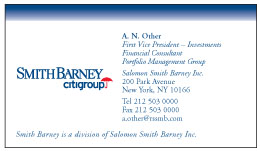
Business cards. A bar, a bank, a brokerage:


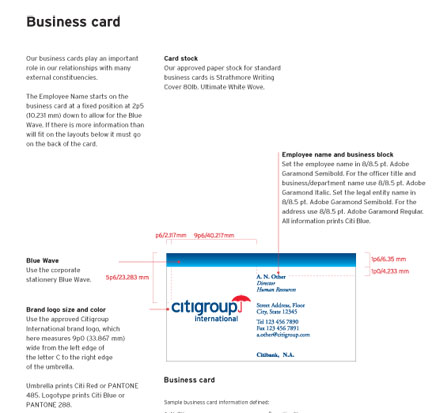
Bits of corporate-identity branding guides I created with SB Advertising and the Sterling Group:

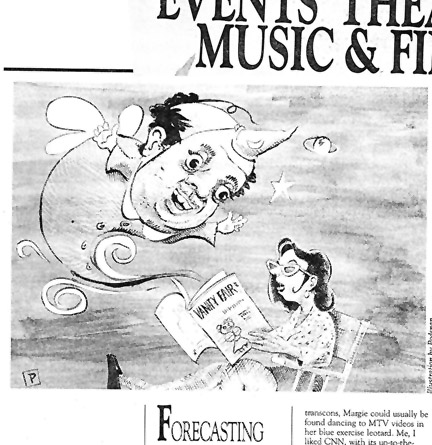
ANCIENT CURIO. I thought I had lost all my old designs and press cuttings in The Fire, but I was wrong. A few things still bubble up on occasion. Below, here's something positively ancient, from the early 90s, when I was a working journalist on the West Coast and moonlighted as an editorial illustrator. This is supposed to be Michael Lutin, Vanity Fair's camp astrologer.
Above: sample front/back spread for a customizable 8- or 16-page client newsletter, 2007. Part of an online web-to-print project for which I created the Quark and xml templates. Clients could select articles, images, and other elements, then review a pdf before pulling the trigger and ordering (say) 10,000 copies to be maillisted out next Tuesday.

Detail of an FMA Card collateral piece for SB Advertising, early 2005.
If the design schema looks vaguely familiar, that could be because it was reflecting the neat-as-pin tiny-type layouts then current in web design. Case in point: the Movable Type blog you're looking at, which dates from the same period.
The style worked for blogs and posters and advertisements, but not for newsletters, which had to look messy and interesting so people would read the copy. E.g., the Accel piece below:
One of a series of covers I did for bond-research books, 2001-2006:

This looks very old:

This was just silly. As they said in The Twilight Zone, It's a Cookbook!

Detail of elaborate display, Investment Banking in Silicon Valley:

One of many web icons and branding elements I created, replaced, reworked or whatever:

Something about Microsoft and SCO vs Linux and Open Source?

I created 30 or 40 logos for Smith Barney alone. This one was current for a couple of years, then we flipped the corporate ID and used a different one for the next two years:

Business cards. A bar, a bank, a brokerage:


Bits of corporate-identity branding guides I created with SB Advertising and the Sterling Group:


ANCIENT CURIO. I thought I had lost all my old designs and press cuttings in The Fire, but I was wrong. A few things still bubble up on occasion. Below, here's something positively ancient, from the early 90s, when I was a working journalist on the West Coast and moonlighted as an editorial illustrator. This is supposed to be Michael Lutin, Vanity Fair's camp astrologer.

I never went to commercial-art school (unless you count a half-dozen CE courses at School of Visual Arts) so I am at a disadvantage here. A double disadvantage, actually, since I am incapable of regarding a commercial-art BFA or MFA as a genuine degree.
I'm not being a Gradgrind here. I don't regard MBA school as "real" graduate school either.
It reminds me of a story from my friend Bret, about her own days in commercial-art school. She went to SVA. She shared a place in Hoboken with a Cooper Union girl. Now, SVA and Cooper Union are about as different from each other as you can get and still be called an art school. The School of Visual Arts is frankly, utterly commercial. That's what makes it so neat: people go there to learn a trade, so they can get a leg up into advertising and media. Lots of practice, little theory. But Cooper Union, like most elite colleges and universities, has loftier goals: it aims to provide an education.
Anyway, Bret was in her last semester at SVA and feverishly perfecting her Portfolio for review by her faculty advisor. The Cooper Union girl wondered if she should be working on her Portfolio too. So she asked one of her teachers, and the teacher just laughed airily and said, "Oh, at Cooper Union we're not about Portfolios."
I don't know if there's a moral here. I think it's just a story.
]]>